As you look for lift kits and truck accessories in Reading, first decide whether a leveling kit or full suspension lift is right for you. A leveling kit corrects factory rake and maintains daily handling, while a suspension lift system provides clearance, wheel travel, and larger tire fitment. Make sure you have precise year, trim, drivetrain, and suspension details to verify Rough Country fitment. Plan your budget for tires, alignment, and add-ons including steps, lights, or liners—you'll see how the proper setup takes shape.
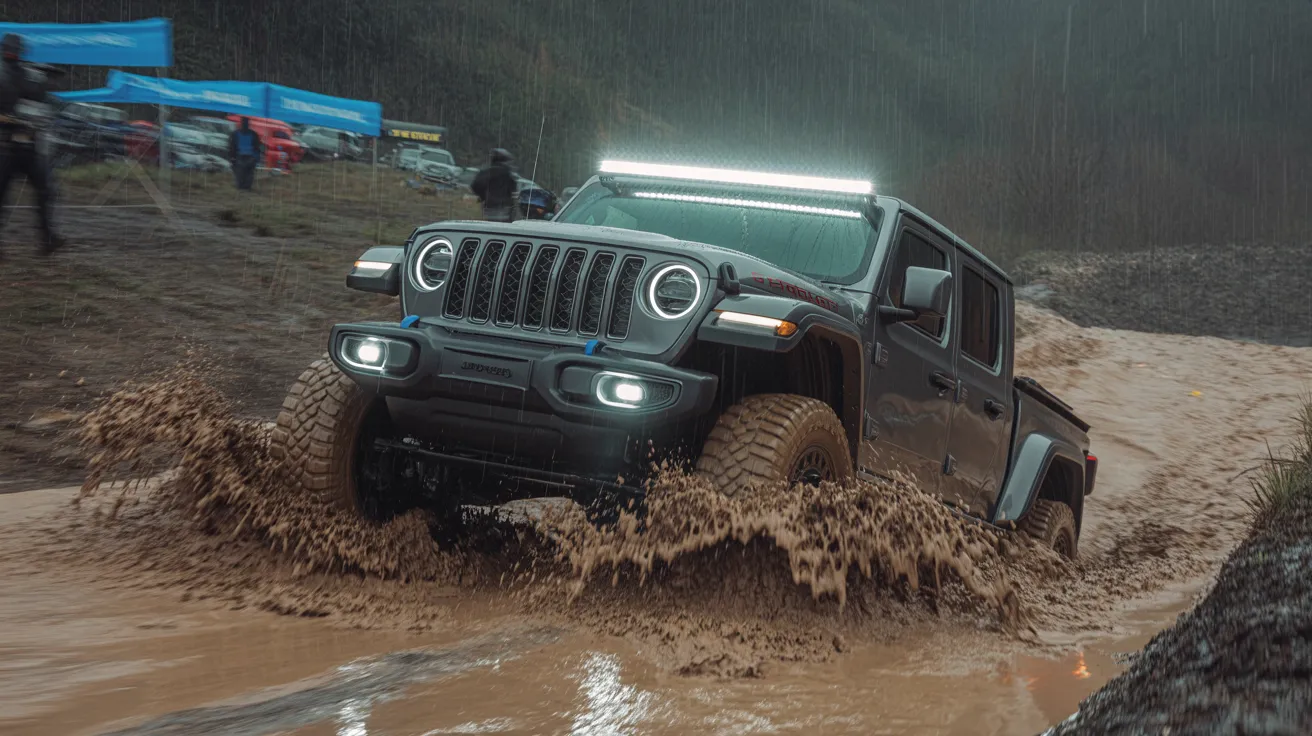
Key Takeaways
- Choose a leveling kit to remove factory rake while keeping near-stock performance and fitting bigger tires for daily driving.
- Choose a suspension lift kit for added clearance, suspension articulation, and off-road performance, recognizing that handling and steering may differ.
- Confirm proper fitment by verifying your truck's year, make, model, drivetrain, trim, cab, bed, and suspension package before ordering Rough Country products.
- Pair lift height and shock setup to your driving needs, whether you're commuting, mixed trail driving, towing, or heavier off-road travel.
- Allocate funds for beyond just the kit price, factoring in alignment, labor, wheels, tires, shocks, and supporting accessories including steps, lights, and liners.
Comparing Suspension Lift Kits and Leveling Kits
Even though both upgrades change your truck's look, suspension lift kits and leveling kits solve different problems and deliver different outcomes. A leveling kit tends to raise the front to match the rear, correcting factory rake with limited change to geometry, ride height, and everyday drivability. You use one if start now you seek a cleaner look and room for slightly larger tires.
A suspension lift kit lifts the entire truck and revises key components to enable more ground clearance and wheel travel. You'll see significant gains in ride height, off-road capability, and tire fitment, but you should expect handling tradeoffs, steering changes, and a higher center of gravity. When you prefer mild visual correction, apply a leveling kit. If you require true clearance and articulation, go with a suspension lift and structure the supporting mods according to your driving needs.
Which Rough Country lift kit suits your truck?
To find what you need, start with your truck's year, make, model, drivetrain, and primary purpose, because Rough Country builds lift kits around specific geometric requirements and capability objectives. That baseline tells you which mounting brackets and suspension parts will actually attach securely without clearance or alignment issues.
Next, review factory ride height, cabin and bed configuration, axle configuration, and whether your truck has 2WD, 4WD, or adaptive suspension. Rough Country fitment guides help with this step, but you still need to validate trim compatibility against configuration-specific components and factory package variations. A kit that fits a Silverado 1500 may not fit a Trail Boss, and a Ram with air-based suspension requires different modifications than a vehicle with coil springs. When you confirm exact fitment first, you prevent installation issues, hardware conflicts, and reshipment delays.
What Rough Country lift kit suits your driving style?
Match the kit to how you drive, and you'll achieve improved ride comfort, longevity, and clearance for larger tires without spending on unused features. When your truck mainly commutes, choose a mild Rough Country leveling kit or a 2 to 3.5 inch suspension setup optimized for daily comfort and stable steering response.
When you alternate between pavement and trails, upgrade to a suspension upgrade that includes upgraded shocks and adjusted control arm geometry. You'll experience stronger off road handling, enhanced articulation, and clearance for larger tires without straining factory components. For serious trail work, select raised struts, N3 and Vertex dampers, and suspension systems that preserve driveline geometry under load. The right Rough Country package should match payload, speed, and terrain, and your tolerance for ride stiffness.
Top Rough Country Truck Accessories
Finish your lift setup including Rough Country add-ons that fix the real problem areas you'll notice after changing ride height, tire size, and vehicle stance. Begin with upgraded entry steps or rock sliders, which bring back ease of cabin entry and provide lower-body protection now that your truck sits higher and broader.
Then focus on view and handling. Rough Country LED light bars improve visibility range on dark trails, job sites, and rural roads without difficult installation. Cabin protection and floor mats protect cabin components from soil, gravel, and water you'll bring in from trails. Wheel flares help contain tire spray and match the wider profile created by bigger rubber. For towing or recovery, robust hitches, recovery hooks, and winch-mounted bumpers provide utility without sacrificing compatibility. Pick accessories that match your lifted truck's dimensions and intended use.
How Much Budget Do You Need for Your Build?
After you've chosen the lift kit and supporting accessories, create a budget exceeding the listed kit price. You'll require money for suspension shocks, wheels, tire set, alignment, installation labor, and any drivetrain or steering upgrades your platform needs. Brand reputation is important here; premium systems generally provide better precision, enhanced comfort, and less installation difficulty.
In terms of practical budget estimates, assume entry-level spacer or leveling setups to start lower, whereas full suspension setups with control arms, adjusted dampers, and larger wheels surge upward. Installation complexity, shop rates, and calibration work can add substantially. You must also budget supplementary upgrades including gear changes, brake systems, and recovery equipment if trail use is planned. When finances are limited, compare loan options cautiously and stress reliability over flashy add-ons.
Questions You Might Have
How Do Lift Kits Influence Warranty Coverage?
Yes, suspension kits may impact your original warranty, but they won't automatically cancel it. You face warranty issues if the manufacturer proves the lift kit brought about or contributed to a failure. Engine, steering, suspension, and drivetrain problems frequently create dealer conflicts. You should keep installation records, use premium parts, and follow service intervals. That helps you refute denied warranties and protect coverage where the modification isn't responsible.
Does Going Bigger Require Gear Changes?
Yes—when you upgrade several tire sizes, you'll often need gear ratio adjustments. Take switching from 31s to 35s, for example—your truck can feel sluggish, hunt for gears, and increase drivetrain strain under load. Changing your gears restores effective gear ratios, helping you recover power delivery, towing capacity, and transmission feel. You might not need it for small tire changes, yet if power, MPG, or shifts worsen, it's usually the right call.
How Frequently Should You Inspect Lift Parts?
You must check lift kit components at 500 miles, later during each oil change or every 3,000 to 5,000 miles, according to driving patterns. Periodic inspections help you detect bushing deterioration, shock seepage, bracket harm, and alignment mishaps initially. Test fastener snugness after hard off-road runs, towing, or impacts. When you drive through mud, salt-laden, or rough terrain regularly, shorten intervals and review steering and suspension systems regularly.
Does a lift kit impact towing or payload capacity?
Yes, a lift kit can change your vehicle's towing and payload specifications. When you boost ground clearance for improved clearance, you adjust suspension setup, balance point, and component leverage. That can lower stability under load and heighten drivetrain pressure, mainly with larger tires. You should respect your manufacturer's ratings unless an engineered kit formally documents modified ratings. Right alignment, gearing, and braking operation matter too.
Do Alignment Services require focus following the installation of truck accessories?
Yes—if accessories alter ground height, suspension design, steering angles, or tire dimensions, you need an alignment. You'll feel the theory fast: minor adjustments can pull your truck off-center, scrub tread, and compromise handling. A correct alignment returns camber, caster angle, and toe angle to spec. After certain installs, you might require brake calibration for driver assistance precision. You preserve tire longevity, steering accuracy, and actual safety by checking alignment immediately.
Summary
Picking the right suspension setup and accessories comes down to how you use your truck, what stance you want, and what your budget can handle. When you connect a Rough Country lift kit alongside your driving style, you'll gain strength, elevation, and visual appeal that work together as smoothly as a fine-tuned transmission. Add intelligent add-ons, plan your spend carefully, and you'll construct a truck proving practical on the road, competent outdoors, and ready for whatever job comes next.